

Interview with Orla Tann
I spoke to Orla Tann about her installation at the 2026 Slade BA/BFA degree show, there was something so startling about the installation, how it brilliantly transformed the high-ceiling space thoroughly knocking the air out of your system. It was, therefore, very lucky for me that Orla was sat outside, invigilating so that I could invite her to speak about this work.
The door slides open gratingly close to wooden structures that Tann describes as ‘encagements’. Forcing the audience to open the door so that they cannot pre-emptively see what is inside has allowed Tann to position the viewer as intrinsically part of the work from the start, creating a continuous bodily reaction of curiosity and vulnerability. These cage-like structures are puncturing and clawing as they themselves are punctured and clawed, you peep into gaps through the wood hoping you do not get a scratched eye or a gnawed cheek. The claustrophobic transformation of the space gives a heightened sense of being watched as you lurk round each bend.
The dog is eating itself.
Maryam: How do you approach making spaces that look at you back as you look at them?
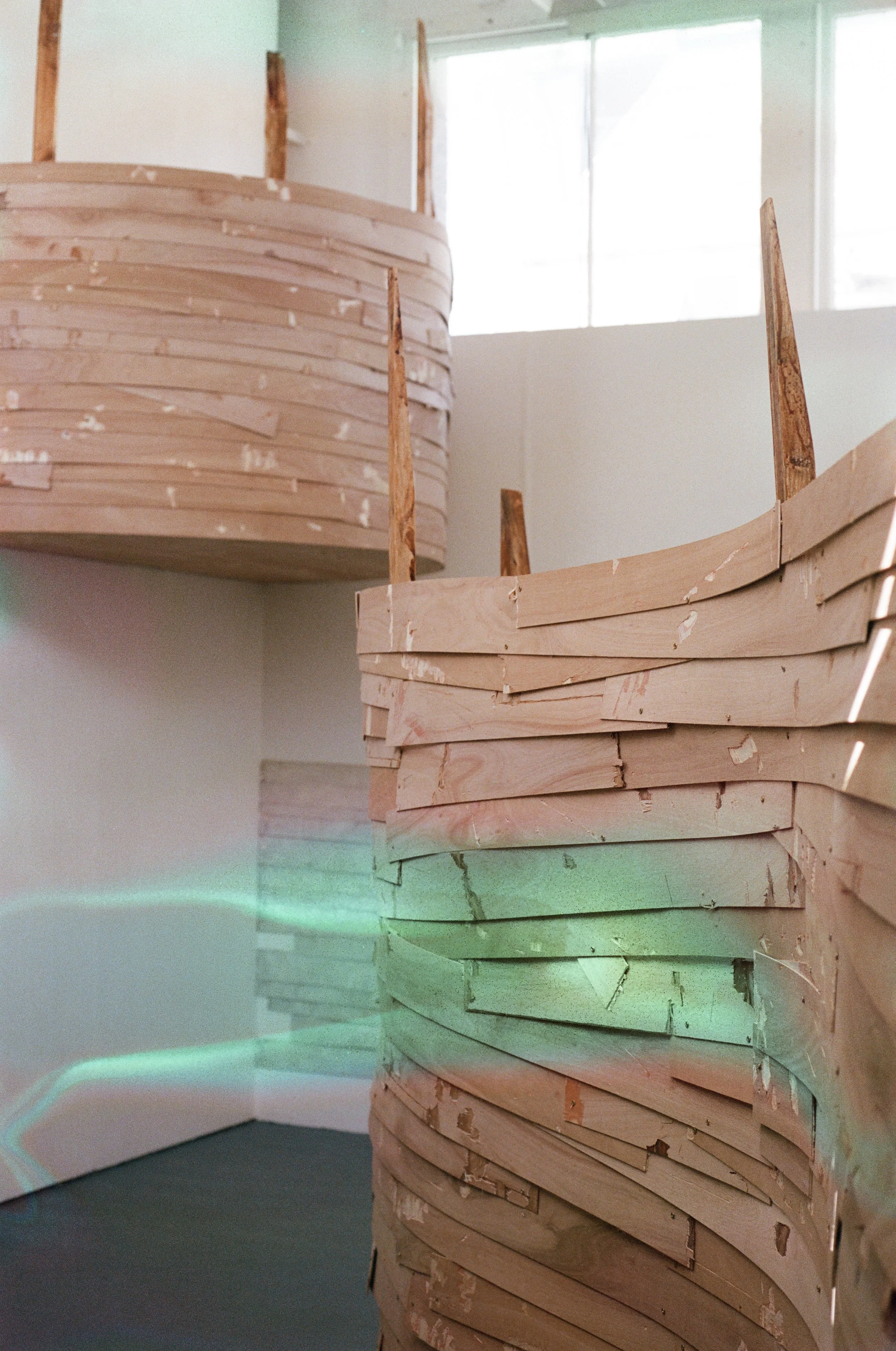
Orla Tann, 2026, photographed by Yazi Nazari
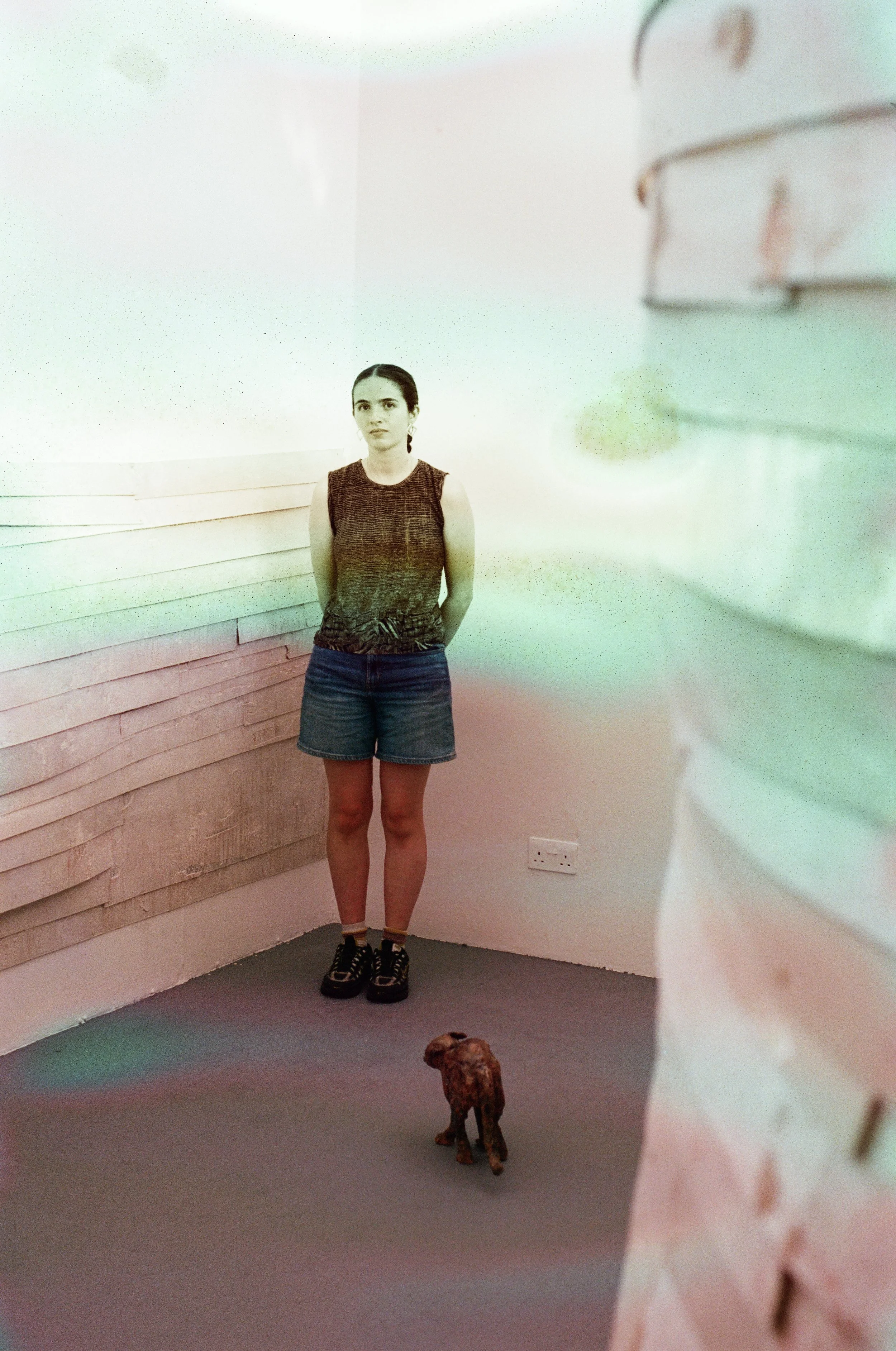
Orla Tann, 2026, photographed by Yazi Nazari
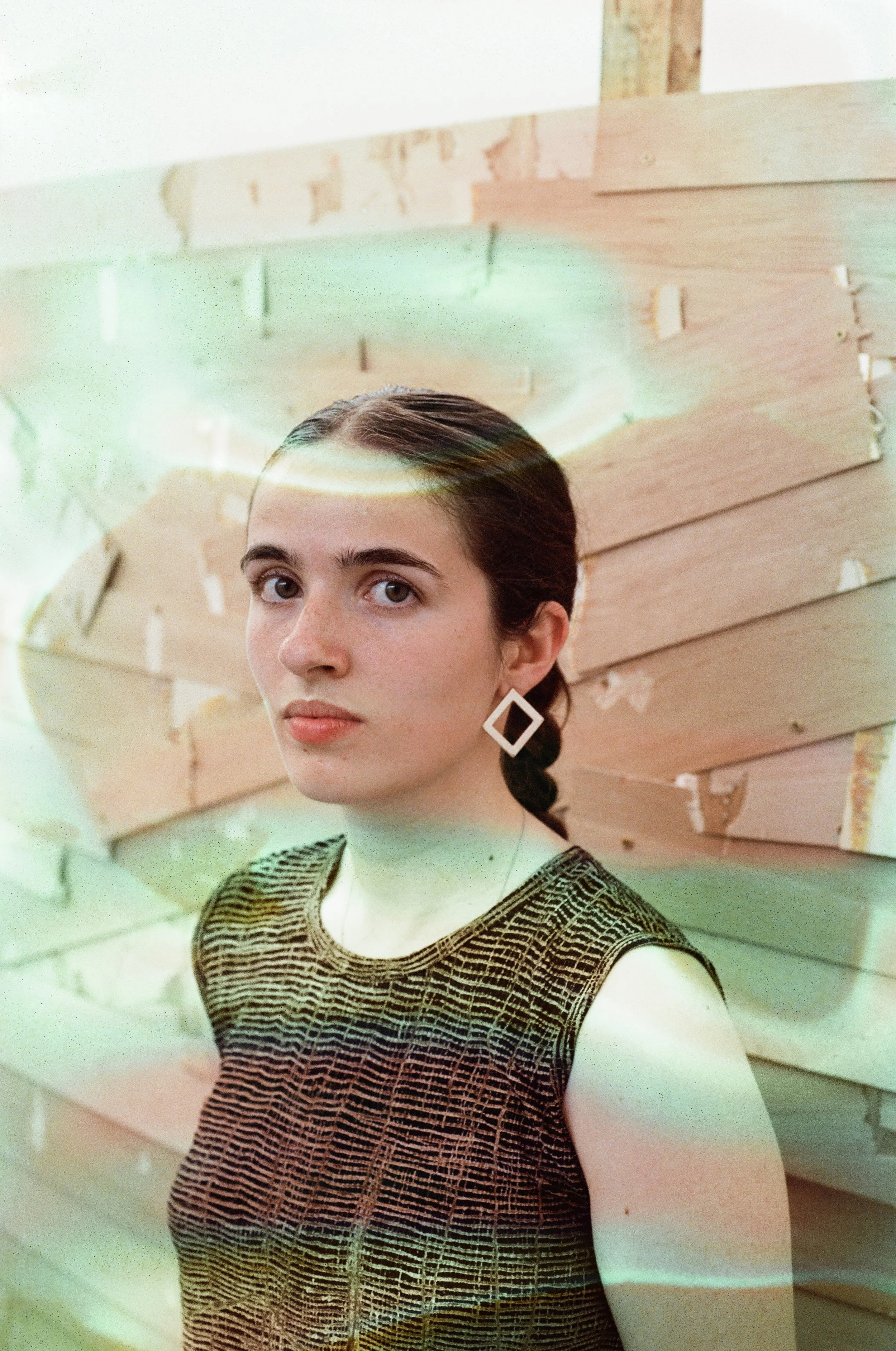
Orla Tann, 2026, photographed by Yazi Nazari
Orla Tann: I approach space as a form of reflection, almost as if the space is looking back at the viewer as much as the viewer is looking at it. I’m interested in creating environments that confront, provoke, and physically engage the audience. For me, the work is never static; the space interacts with the people inside it, but also with itself.
In a world shaped by spin, social media, and conflict, the pursuit of truth feels both courageous and deeply generous. I think that tension feeds into the spaces I make. I’m drawn to confrontation and shock, not for spectacle alone, but because they mirror the mayhem and instability of the world around us.
Physical interaction is really important to me, the audience becoming aware of themselves within the work, and the work becoming activated through their presence. I want the viewer to feel implicated within the space rather than simply observing it from a distance.
Maryam: That is immediately and immensely communicated in the work, I think there is something paranoid, forceful and perhaps, psychological in the mark-making and texture of your work; Can you explain some of the thought process behind the materials and how it connects to other conceptual concerns in your practice?
Orla Tann: There is something psychological in the way I approach materials and mark making. I’m drawn to attraction and repulsion, humour, familiarity, and unease. Many of the materials I use are ordinary and embedded in everyday life. Wood, for example, exists everywhere in furniture, buildings, and domestic spaces, and I’m interested in pushing something so familiar beyond its expected function.
The wood panelling carries harsh marks, cracks, weathering, and imperfections that become almost human. I want the surfaces to hold both force and vulnerability. The peepholes interrupt that aggression with moments of hope, curiosity, and surprise the longer you sit with the work, the more it reveals itself.
I’m also drawn to expression and figuration. The force of clay cracking feels visceral and absurd, almost as if the material itself is under psychological strain. Figurative elements, like the dog eating itself, push ideas of repetition, instinct, and self-destruction further.
Golden syrup is another material that became important because of its contradictory qualities: sweet, seductive, sticky, and slightly repulsive. Spreading it across a large white wall. I see humour as a way of navigating existential threat. In a world shaped by mistruths, conflict, and overstimulation, laughter can become both release and resistance.
To me, the role of the artist in exposing the complexities of contemporary life has never felt more important.
Orla Tann is going on to an exciting residency in Patagonia in the new year, a chance for her to immerse herself in a different landscape. It will be incredibly exciting to see how the experience shapes her art practice.
Thank you to Yazi Nazari for photography, as always.